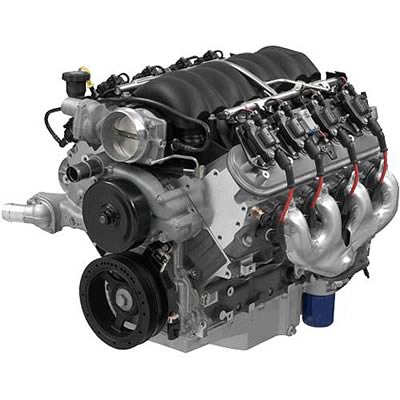
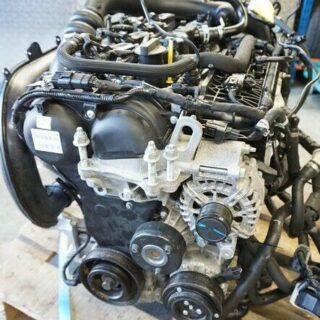
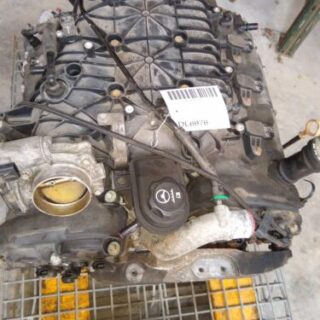
GM V8 Supercharged LSA Engine
- GM V8 Supercharged LSA Engine
- Enhanced Cylinder Block: the 6.2L engine block used with the LSA is cast from 319-T7 aluminum and fitted with cast-iron cylinder liners.
- Compared to previous blocks, it has been strengthened 20 percent by optimizing the size of the bulkhead “windows” to take advantage of material thickness in the bulkhead. The enlarged bulkhead windows also improve bay-to-bay breathing by managing airflow inside the engine more efficiently, thereby decreasing pumping loss, or reducing resistance to the pistons’ downward movement.
- The engine block was developed with the latest math-based tools and data acquired in GM’s racing programs, and it provides an exceptionally light, rigid foundation for an impressively smooth cam-in-block engine. Its deep-skirt design helps maximize strength and minimize vibration, and its aluminum construction reduces weight approximately 100 pounds compared to a conventional cast-iron cylinder block.
- Deck Plate Honing: a precision machining process reserved for high-performance engines, is used on the LSA cylinder block to maximize engine life, reduce friction between engine parts and increase horsepower. It is advantageous in applications where cylinder head pressures are greater than average – such as with a supercharged engine – to ensure cylinder sealing and prevent scuffing of the piston against the bore wall. In the LSA engine, this means improved bore life and ring sealing. True bores and better sealing are keys to optimizing power.
- Pistons with Oil-Spray Cooling: The LSA’s pistons are aluminum-cast from a high-silicon alloy developed for its combination of strength and heat-management properties.
- Casting reduces noise-generating potential, compared to other high-performance piston materials, such as forged aluminum, and is specified when noise and vibration control is a priority.
- The hypereutectic pistons are also lighter than conventional steel, which translates to less reciprocating mass inside the engine. Less mass means greater efficiency, high-rpm capability and a feeling of immediate response as the engine builds rpm.
- Lightweight Rotating Assembly: within the LSA’s cylinder block spins a balanced, dropped-forged steel crankshaft with an eight-bolt flange to mount the flywheel.
- The eight-bolt pattern increases clamping strength compared to naturally aspirated 6.2L V-8s, which use a six-bolt crank flange.
- Forged powder-metal connecting rods link the crankshaft and pistons.
- They are forged under extreme pressure from alloy metals reduced to powder, rather the melted to liquid, for a balance of low mass and high strength.
- They reduce pressure on both the rod-end bearings and main bearings, compared to conventional rods, and allow the bearings to be optimally sized for the least amount of friction.
- GM V8 Supercharged LSA Engine High-Flow Rotocast Cylinder Heads: the LSA cylinder heads are manufactured with a unique rotocast method, which rotates the head mold as the molten alloy cools and essentially eliminates porosity, or microscopic pockets of air trapped in the casting. Rotocasting delivers a stronger part that helps maintain performance and structural integrity over the life of the engine.
- Refined Low-Lift/Low-Overlap Camshaft: a refined camshaft helps balance the 6.2L LSA’s high output with smooth, tractable low-rpm performance. The torque-enhancing benefits of the supercharger allowed engineers to develop a “softer,” lower-lift camshaft for the LSA, compared to the typical high-rev, high-power exotic car engine. The result is smoother operation at idle and during low-speed driving.
- Cast-Iron Exhaust Manifolds with Close-Coupled Catalysts: the 6.2L LSA exhaust manifolds are fabricated from a premium high-silicon, high-moly iron alloy. The material delivers excellent heat management properties, and the design ensures the high flow volume required of an engine with the LSA’s capability. Immediately downstream, the exhaust manifolds are fitted with a pair of close-coupled catalytic converters that heat quickly, achieving light-off temperature and closed-loop operations in seconds.
- Upgraded Oiling System: to ensure peak, low-friction efficiency, and to promote durability during extended high-rpm operation, the LSA has a more powerful oil pump than the naturally aspirated 6.2L LS3.
- The oil pump capacity is increased to 33.8 gallons per minute and the LSA’s six-quart oil pan is fitted with a liquid-to-air oil cooler.
- Dual-Pressure/Center-Feed Fuel System: to ensure appropriate fueling in all conditions, the LSA features a dual-pressure fuel system. The dual-pressure system reacts according to throttle application, and presents several advantages. It limits the energy used by the fuel pump at low speeds, for maximum efficiency, and it reduces operational noise. The LSA also employs a center-feed fuel rail that delivers gasoline to the center of the injector rail and each bank. This helps reduce fuel pressure variation among the injectors, as well as noise.
- Dual-pressure system delivers about 36 psi (250 kPa) at idle and low speeds.
- Electronic throttle management system can immediately increase fuel pressure to 87 psi (600 kPa) for sustained high-speed operation or wide-open throttle.
- Supercharger with Four-Lobe Rotors: state-of-the-art supercharging technology is the foundation of the LSA’s remarkable performance. The supercharger is an air pump driven by the engine’s crankshaft. It forces more air into the engine’s combustion chambers than the engine could otherwise draw on its own. The increased volume of oxygen allows the engine to efficiently process more fuel, and thus generate more power.
- Dual Brick Air-to-Liquid Intercooler: an advanced intercooling system increases the 6.2L LSA’s performance and extends its supercharger’s benefits. Similar in concept to an engine’s radiator, intercoolers cool the air pumped by the charging device into the cylinders. Cooler air is denser air, which means more oxygen in a given volume, resulting in optimal combustion and more power. Traditionally, intercoolers look like small radiators mounted somewhere outside the engine, with air fed into the engine through a plumbing network.
- The LSA’s charge cooler is integrated in the supercharger case just above the rotors, with two air-to-liquid cooling “bricks” that substantially lower the temperature of air used in the combustion process. Intercoolers are familiar features on supercharged and turbocharged engines.
- Direct-Mount Ignition Coils: the LSA’s coil-on-plug ignition features advanced coils that are smaller and lighter than those used on previous V-8s. An individual coil for each spark plug delivers maximum voltage and consistent spark density, with no variation between cylinders.
- 58X Ignition System: the LSA has an advanced 58X crankshaft position encoder to ensure that ignition timing is accurate throughout its operating range.
- The new 58X crankshaft ring and sensor provide more immediate, accurate information on the crankshaft’s position during rotation. This allows the engine control module to adjust ignition timing with greater precision, which optimizes performance and economy. Engine starting is also more consistent in all operating conditions.
GM V8 Supercharged LSA Engine Specifications
GM 6.2L V8 Supercharged LSA Engine Specs
| Type: | 6.2L Gen IV V8 Small Block |
| Displacement: | 6162 cc (376 ci) |
| Engine Orientation | Longitudinal |
| Compression ratio: | 9.1:1 |
| Valve configuration: | Overhead valves (2 valves per cylinder) |
| Assembly site: | Silao, Mexico |
| Valve lifters: | Hydraulic roller |
| Firing order: | 1 – 8 – 7 – 2 – 6 – 5 – 4 – 3 |
| Bore x stroke: | 103.25 x 92 mm |
| Fuel system: | Sequential fuel injection |
| Fuel Type: | Premium required |
| Maximum Engine Speed: | 6200 RPM |
| Materials | |
| Block: | Cast aluminum |
| Cylinder head: | A356-T6 rotocast cast aluminum |
| Intake manifold: | Cast aluminum |
| Exhaust manifold CTS: | High silicon / high moly cast iron |
| Exhaust manifold Camaro: | Cast stainless steel |
| Main bearing caps: | Nodular Iron |
| Crankshaft: | Forged steel |
| Camshaft: | Hollow steel |
| Connecting rods: | Forged powder metal |
| Additional features | |
| 1.9 L/rev Supercharger | |
| Integrated single coolant to air intercooler | |
| Piston oil spray cooling | |
| Direct mount ignition coils | |
| Emissions controls | |
| Catalytic converter | |
| Three-way catalyst | |
| Positive crankcase ventilation | |
| Valves per cylinder | 2 |
| Bore Center (mm) | 111.76 |
Related products
-
Used DODGE Van 2500 Engines for sale
$500.00Add to cartUsed DODGE Van 2500 Engines Used DODGE Van 2500 Engines for sale For Dodge Van 2500 Engines you have come to the right place. we have a number of used Dodge Van 2500 Engines to fit your needs whether they be mileage concerns or price. We also test the Units that we ship out . …
-
2JZ-GTE engine 3.0-liter
Read more2JZ-GTE engine is a legendary 3.0-liter inline-six produced by Toyota, featuring a twin-turbocharged design. Here are its key specifications: – Engine Details – Type: Inline-6, DOHC, 24-valve – Displacement: 3.0 liters (2997 cc) – Bore x Stroke: 86 mm x 86 mm – Compression Ratio: 8.5:1 – Fuel System: Electronic fuel injection with sequential multi-point …
-
1HZ 4.2L ENGINE
Read moreToyota 1HZ engine is a 4.2-liter, 6-cylinder diesel engine with the following specifications ¹: – Engine Details – Type: Straight-6, vertical – Displacement: 4,164 cc (254.1 cu in) – Cylinder Block: Cast iron – Cylinder Head: Cast iron with single overhead camshaft (SOHC) – Valves: 12 (2 valves per cylinder) – Fuel System: Mechanical injection …
-
3vze engine
Read moreThe Toyota 3VZE engine is a 3.0-liter V6 engine with the following specifications: – Engine Type: 4-cycle V6-cylinder DOHC petrol engine – Displacement: 2,958 cc (180.5 cu in) – Cylinder Bore: 87.5 mm (3.44 in) – Piston Stroke: 82.0 mm (3.23 in) – Compression Ratio: 9.0:1 – Power Output: 145-150 horsepower (108-112 kW) – Torque …
-
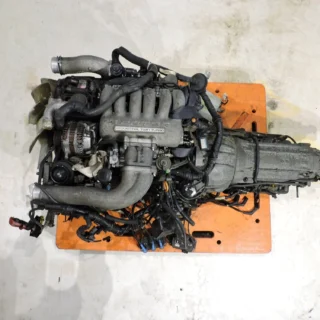
20B engine is a 2.0-liter
Read more20B engine is a 2.0-liter Mazda 20B engine is a 2.0-liter, triple-rotor Wankel engine with impressive performance capabilities. Here are its key specifications: – Engine Details – Type: 3-rotor Wankel rotary engine – Displacement: 2.0 liters (1962 cc), with each rotor having a displacement of 654 cc – Fuel System: Electronic Fuel Injection – Compression …
-
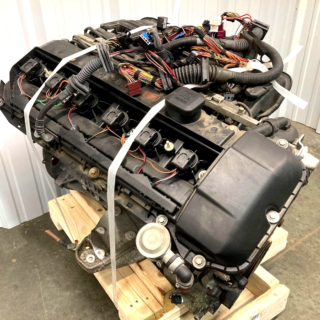
Used BMW 530i Engines for sale
Read moreUsed BMW 530i Engines Used BMW 530i Engines for sale For BMW 530i Engines you have come to the right place. we have a number of used BMW 530i Engines to fit your needs whether they be mileage concerns or price. We also test the Units that we ship out . So whether price or …
-
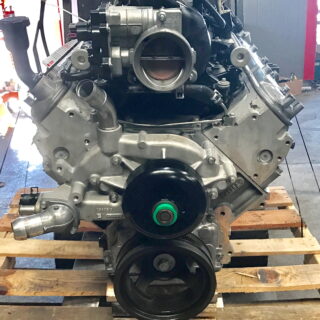
Used CHEVROLET Silverado 1500 Engines for sale
Read moreUsed CHEVROLET Silverado 1500 Engines Used CHEVROLET Silverado 1500 Engines for sale For CHEVROLET Silverado 1500 Engines you have come to the right place. we have a number of used Chevrolet Optra Engines to fit your needs whether they be mileage concerns or price. We also test the Units that we ship out . So …
-
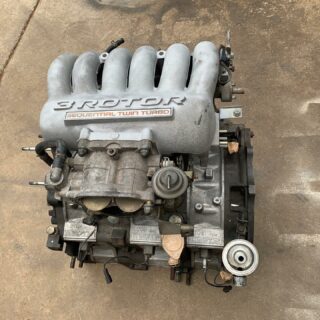
13B RX-7 turbo engine
Read more13B RX-7 turbo engine is a legendary rotary engine produced by Mazda, known for its impressive performance and unique design. Here are some key specifications: – Engine Type: Twin-rotor Wankel rotary engine – Displacement: 1.3 liters (654cc x 2 rotors) – Power Output: – 13B-Turbo: approximately 185 horsepower – 13B-REW: 255-265 horsepower – Torque Output: …
-
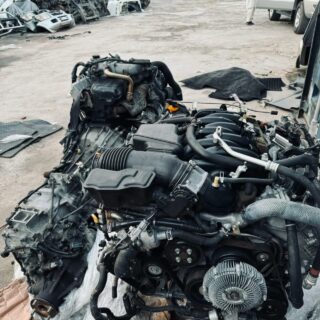
3UR-FE ENGINE
Read moreToyota 3UR-FE engine is a 5.7-liter V8 engine with the following specifications ¹ ²: – Engine Type: 4-stroke, naturally aspirated V8 engine – Displacement: 5,663 cc (345.6 cu in) – Cylinder Block: Die-cast aluminum with 90-degree V angle – Cylinder Head: Aluminum alloy with dual overhead camshafts (DOHC) and 4 valves per cylinder (32 total) …
-
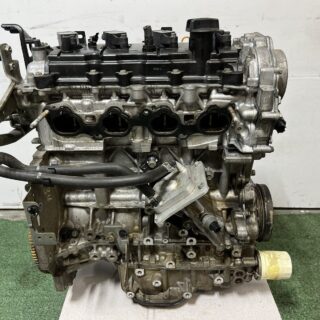
Used NISSAN Armada Engines for sale
$500.00Add to cartUsed NISSAN Armada Engines Used NISSAN Armada Engines for sale For Nissan Armada Engines you have come to the right place. we have a number of used Nissan Armada Engines to fit your needs whether they be mileage concerns or price. We also test the Units that we ship out . So whether price or …
Testimonials

Sabina
Vivamus arcu felis bibendum ut tristique et egestas. Eu sem integer vitae justo eget magna fermentum

Ricky
Vivamus arcu felis bibendum ut tristique et egestas. Eu sem integer vitae justo eget magna fermentum
Reviews
There are no reviews yet.